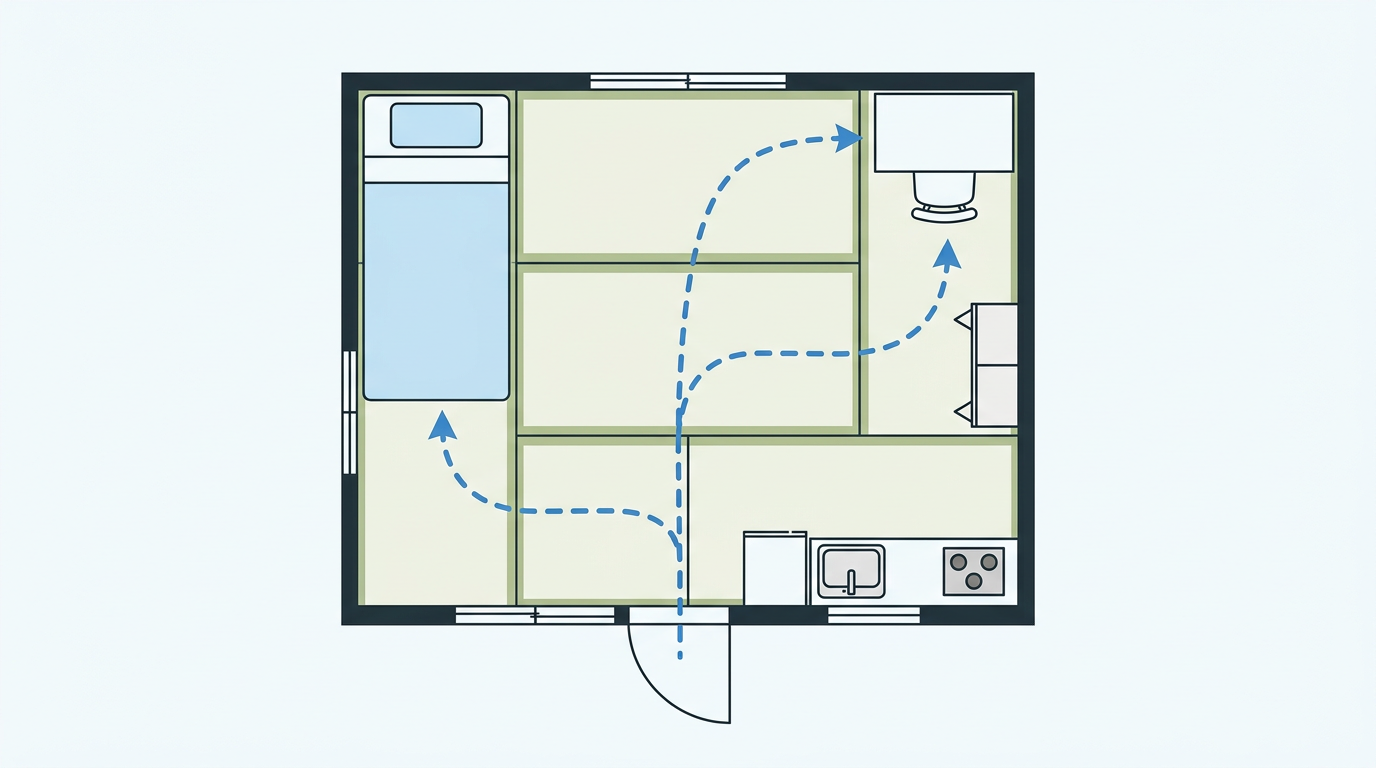
1. Define the room's main purpose in one sentence
A studio becomes easier to plan once you decide whether the room is mainly for sleep, work, storage, or hosting. Without that priority, every later decision becomes fuzzy and you tend to create a layout that tries to maximize everything while serving nothing particularly well.
For example, someone working from home may care most about desk clearance and light, while someone focused on sleep may care more about bed position, noise, and window conditions. Studios reward clear priorities because small differences in layout quickly affect daily comfort.
2. Protect circulation and fixed-use zones early
Entry routes, kitchen frontage, closet doors, and window access should be treated as protected zones before you start filling the plan with furniture. If those strips disappear, the room may still fit furniture numerically while becoming frustrating to live in.
In practice, the path from the entrance to the living area, storage, or kitchen is used every day. Leaving those lines visible on the plan before placing the big pieces prevents the classic mistake of solving furniture fit first and usability second.
3. Let the bed placement shape the whole room
In most studios, the bed is the dominant object, so its orientation usually defines what remains possible for the rest of the layout. Whether you push it against a wall, align it with the window, or keep it out of the direct sightline from the entry changes the room more than almost any other choice.
A common mistake is to choose the bed position only because it technically fits. In reality, curtain movement, outlet positions, cleaning access, and the space needed to get in and out of bed all matter. It is often better to start by asking what kind of open area you want to preserve after the bed is placed.
4. Compare desks, tables, and storage by the space in front of them
Furniture size alone rarely tells the whole story. A desk needs chair clearance, storage needs opening clearance, and a low table still needs room for sitting and standing. In a small studio, the empty space in front of the object often matters more than the object footprint itself.
Storage should also be judged by usability and visual weight, not just liters. A tall cabinet may improve storage volume while making the room feel visibly tighter. Lower storage with more sightline continuity can sometimes make the room feel better even if it stores less.
5. The most common failure is “it fits, but it is unpleasant”
Typical studio mistakes include blocking storage doors with the bed, pushing the desk so close to the window that curtains or cables become annoying, placing a sofa that kills the main walkway, or maximizing openness so much that daily storage becomes insufficient. None of those problems are obvious if you only look at footprint fit.
A better workflow is to save alternatives by intent, such as “sleep-first,” “work-first,” or “storage-first,” and compare them side by side. Studios are small enough that even slight differences in orientation or walkway width can change the room dramatically.
6. Test real furniture sizes in the tool before buying
Once you know the size of the bed, sofa, desk, or storage you are considering, enter those dimensions into the tool and compare them directly on your floor plan. Studios are especially sensitive to changes of only a few centimeters, so visual comparison on the plan is much more reliable than intuition alone.
After narrowing options in the tool, use photos or on-site checks to confirm outlets, curtains, light, and visual pressure. The combination of plan-based comparison first and reality checks second is usually the safest way to avoid expensive mistakes.
Related articles
- Layout tricks to make a small room feel bigger
- How to choose the right sofa size
- Common furniture layout mistakes
- Pre-move measurement checklist
To try these ideas on your own room, open the web app and compare candidate furniture sizes on the plan. If you do not have a plan ready yet, start with sample data.