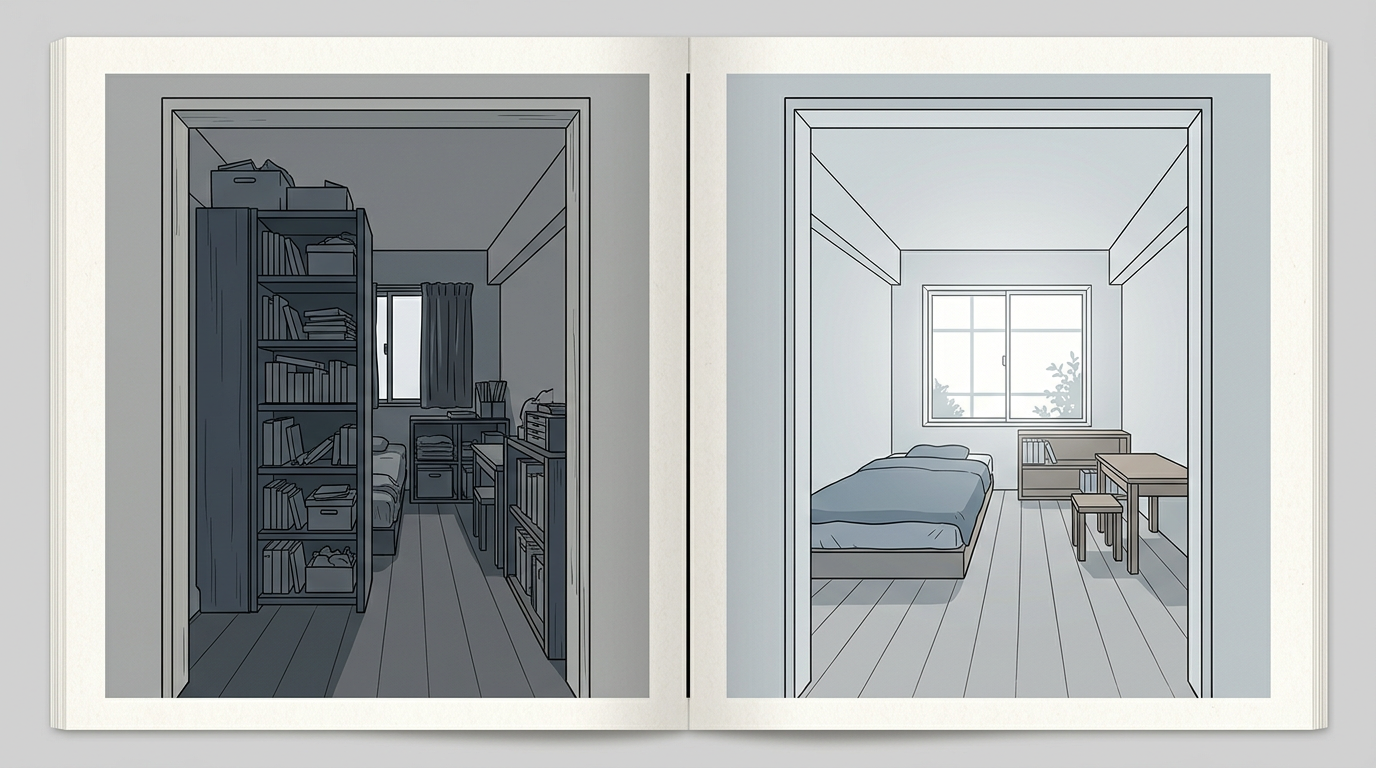
1. Keep the first sightline open from the entry
A room feels tighter when the first thing you see is the side of a tall cabinet or a large furniture block. If your line of sight can travel toward a window or a farther wall, the room often feels more open even when the floor area stays the same.
That is why tall storage or bulky furniture is usually better placed away from the direct entry view. When comparing layouts, ask not only “does it fit?” but also “what do I see first when I walk in?”
2. Favor lower furniture and visible floor
Small rooms often look more cramped as more tall furniture is added. Low furniture is not always the only answer, but a layout with more pieces below eye level usually feels calmer and less compressed.
Furniture with visible legs can also help because it reveals more floor beneath the object. Even a small strip of visible floor can make a room feel lighter than a full block sitting directly on the ground.
3. Limit visual noise in large furniture pieces
If every large piece uses a different color, material, or visual weight, the room starts to feel busy. In a small room, reducing the number of dominant tones often helps more than adding more decoration.
Large pieces that stay close to wall color usually recede better, while dark bulky items stand out more strongly. If you want accents, it is often safer to use textiles or small decor rather than making every large furniture item visually loud.
4. Avoid making every major furniture piece large
A common mistake is choosing a large bed, large sofa, and large storage at the same time because each one feels justified in isolation. In a small room, that combination quickly removes the openness you are trying to preserve.
It is usually better to let one major piece lead and scale the others down slightly. If the bed is the priority, the seating may need to stay compact. If the sofa is the priority, storage may need to become lighter or more vertical.
5. Leave one area intentionally open
Filling every wall evenly can feel tidy on paper, but it often increases pressure in a small room. Leaving one wall area, corner, or floor strip relatively clear gives the eye a place to rest and can make the whole room feel more organized.
This does not have to mean empty space forever. It simply means that not every available zone needs to be occupied by furniture. In small spaces, restraint often does more for comfort than squeezing in one more storage piece.
6. Compare “feel” as well as fit in the tool
In a small room, differences of only a few centimeters can change both circulation and the feeling of openness. Once you know the dimensions of the furniture you are considering, compare them on the floor plan and look not only at whether you can still pass through, but also at how blocked the room appears.
To try it with your own plan, open the web app and compare candidate furniture sizes. If you do not have a plan ready yet, start with sample data.