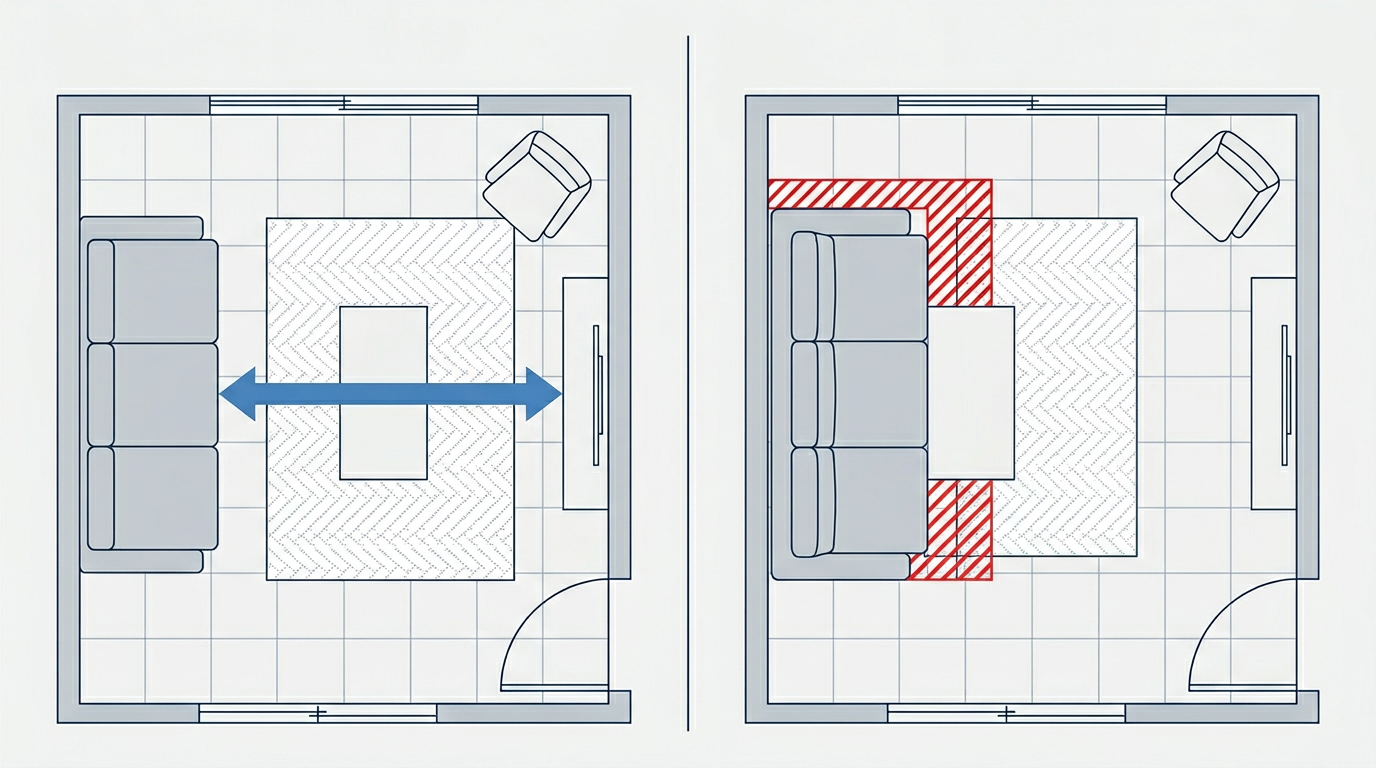
1. Decide the wall and role before the number of seats
People often start with “two-seater” or “three-seater,” but the better first question is where the sofa will go and what it needs to do. Is it mainly for TV viewing, conversation, lounging, or occasional naps? The right size depends on function as much as on seat count.
In a studio or small living room, the sofa often becomes one of the largest pieces in the plan. Its orientation can shape circulation, TV distance, and how much room remains for tables or storage. Choosing the placement first makes size decisions much easier.
2. Judge width by the space around it, not only the wall length
A sofa that technically fits on the wall may still be too large if it leaves no breathing room on either side. The room often looks cleaner and feels easier to use when some side margin remains for lamps, small tables, or just visual relief.
If the side of the sofa also functions as part of a walkway, that side clearance matters even more. The best sofa size is not always the largest one the wall can accept. It is usually the one that fits while leaving the rest of the room workable.
3. Depth quietly removes usable floor area
Deep sofas often feel attractive in a store because they look comfortable and generous, but depth can eat up central floor space faster than many people expect. It affects coffee-table clearance, walkways, and how open the room feels.
This is especially important in compact rooms where even a small increase in depth can change whether the space in front of the sofa remains useful. Look at the front clearance, not just the product spec sheet, when comparing options.
4. Always protect circulation after placement
A sofa may fit in the room while still narrowing the route to the kitchen, balcony, closet, or entry. That is why sofa size should be tested against movement paths, not just against the TV wall or coffee table.
One common mistake is choosing the sofa entirely around viewing distance, then discovering that daily routes become awkward. A sofa is both a seating object and a divider in the room, so the path around it matters almost as much as the seat itself.
5. Watch out for chaise sections, thick arms, and tall backs
Chaise sofas and models with thick arms can become much larger in outer dimensions than their seating capacity suggests. They may feel luxurious in a showroom but steal more circulation and floor flexibility at home.
Tall backs can also make a room feel heavier by blocking sightlines. When comparing sofas, look beyond how many people they seat and ask how much visual weight they add to the room.
6. Compare candidates directly on the floor plan before buying
Sofas are one of the pieces where a difference of only a few centimeters can matter. Once you know the width and depth of your candidates, compare them on the plan against circulation, table spacing, and other furniture.
To test real sofa sizes, open the web app and overlay them on your floor plan. If you do not have a plan ready yet, start with sample data. Trying candidates before you buy is often enough to avoid the most common sofa mistakes.