Assumptions for this unit
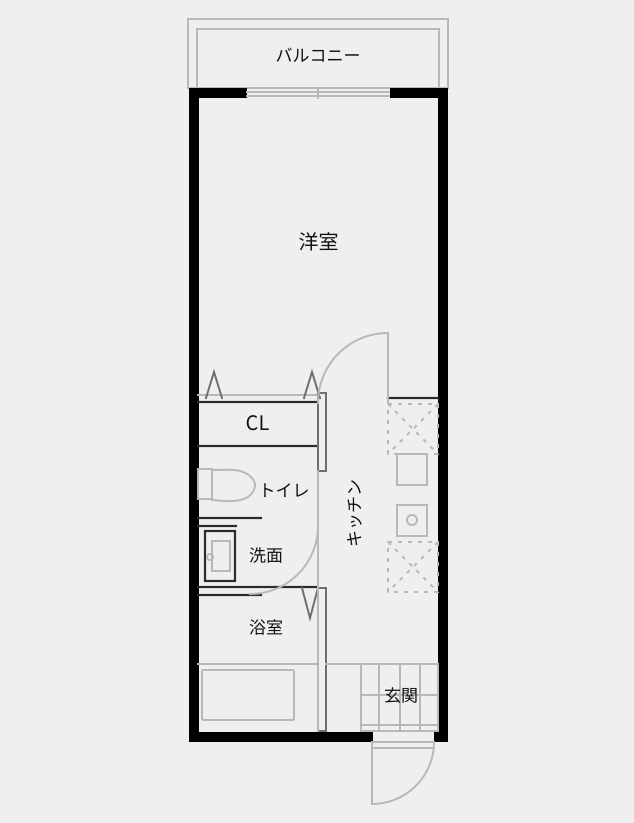
The unit is a typical urban 1K: a separate kitchen zone from the main western-style room. The floor plan below is the provided SVG used as-is (site/guide/one_room_floorplan.svg). It is a long, narrow plan with a wet stack on the left (bath, vanity, toilet, CL on top), a corridor in the middle, a kitchen on the right, and the entry at the lower right. Unlike a 1R “one-room” studio, the kitchen is walled off from the main room. We matched scale to a known main-room width of about 270 cm.
- Main room (inner): about 270 cm × 360 cm (as stated in the article)
- Balcony / window: sliding door on the far wall (double lines in the drawing)
- Corridor & interior door: door from the corridor into the main room on the kitchen-side wall (arc in the drawing)
- CL: top of the left stack (above the toilet), symbols as drawn
- Kitchen: counter on the right (fridge/sink/burner per dashed boxes)
- Entry: lower right. Fridge stays in the kitchen zone, so we did not place it in the main room
Furniture sizes come from manufacturer specs. The fridge is fixed in the kitchen for this exercise.
- Semi-double bed: 120 cm × 198 cm
- Desk (wide): 100 cm × 50 cm
- Four-drawer chest: 45 cm × 40 cm (example)
Setting scale
The scale bar stays on screen. Open scale settings and adjust pixels with the slider or numeric input until the bar matches a known dimension (here, the main room width). Enter the real length in millimeters (e.g. 270 cm → 2700 mm). Add a semi-double bed (120 cm wide) to verify proportion, and cross-check depth (360 cm) if you can. See also the scale guide (Japanese; an English floor-plan article may be added later).
Option 1: Bed vertical along the window (light-first)
Place the bed with its long side along the depth axis, facing the window. Good morning light; balcony access may require walking around the bed.
Outcome:
- 270 − 120 = 150 cm on one side → room for a 100 cm desk plus margin
- 360 − 198 = 162 cm toward the entry → desk depth and path remain feasible
- CL in the plan opens toward the corridor; keep the corridor clear in front of it
Downside: the sliding door zone is mostly blocked; drying laundry and balcony trips get awkward. Sun may hit the bed directly.
Option 2: Bed horizontal along the partition (desk-first)
Place the bed with its long side along the 270 cm partition so the far end of the room stays open for a desk by the window.
Outcome:
- 198 cm bed length leaves about 72 cm beside it for a chest
- After the 120 cm bed depth, about 240 cm remains toward the window for desk and circulation
- Strong daylight at the desk for remote work
Downside: entering from the corridor, you face the long edge of the bed; one long side is against the wall (making sheet changes harder).
Option 3: Head on the left wall, ~80 cm at feet toward CL (revised)
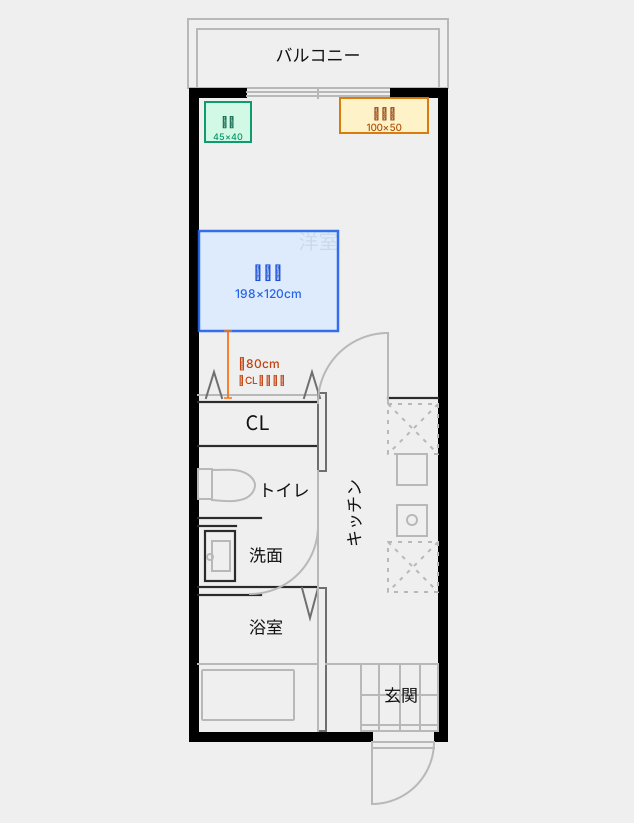
Building on option 2: the CL has bi-fold doors toward the corridor. We want roughly 80 cm of clear space between the foot of the bed (partition side) and the CL zone—not the earlier 15 cm note; 80 cm is the planning target. Leave room for the swing of the interior door into the main room as well.
Bed: keep the head (balcony side) against the left wall. Move the whole bed toward the window (up on the plan) so about 80 cm remains between the partition (feet) and the CL area. It stays a horizontal bed along the left wall; we are not shifting it sideways to “right-align” the whole mattress.
Desk: Landscape—100 cm along the top wall, 50 cm into the room. The desk’s top-right corner is placed at the main room’s top-right corner at floor level (inner face of the outer wall in the drawing, not the kitchen partition line at x≈388, which would sit too far left and look like the window zone). Part of the top may overlap the sash; it still stays inside the window opening toward the balcony.
Chest: tuck under the top wall (below the sliding door), flush to the wall like the desk is to its wall. The 45×40 cm size is only an example.
Final choice (option 3): head on the left wall, ~80 cm feet-to-partition clearance, desk in the top-right corner (top + right walls; partial overlap with the window), chest on the top wall, CL and interior door swings considered.
Takeaways
On paper everything “fits”; in the tool you quickly see blocked paths, door clashes, and sight lines. Watch especially:
- Balcony / window access — is the sliding zone usable?
- In front of the CL — bi-fold depth (often plan for on the order of ~80 cm) and corridor flow
- Which long side of the bed is against a wall — affects sheets and getting in/out
Save layouts as “Option 1 / 2 / 3” and compare side by side in the app.
Checklist: using the tool for a 1K
- Prepare a floor plan image (PDF or screenshot)
- Match scale to a known wall (mm input)
- Place the bed first, then test everything else
- Check window, entry, CL clearance, and interior door swing
- Save and compare multiple layouts
For workflow ideas, see layout tips (Japanese). The web app and sample data help you try without your own drawing first.